
Article: Broccoli Vegetable Seeds - Heirloom, Non-GMO for Home Garden Planting: A Complete Growing Guide
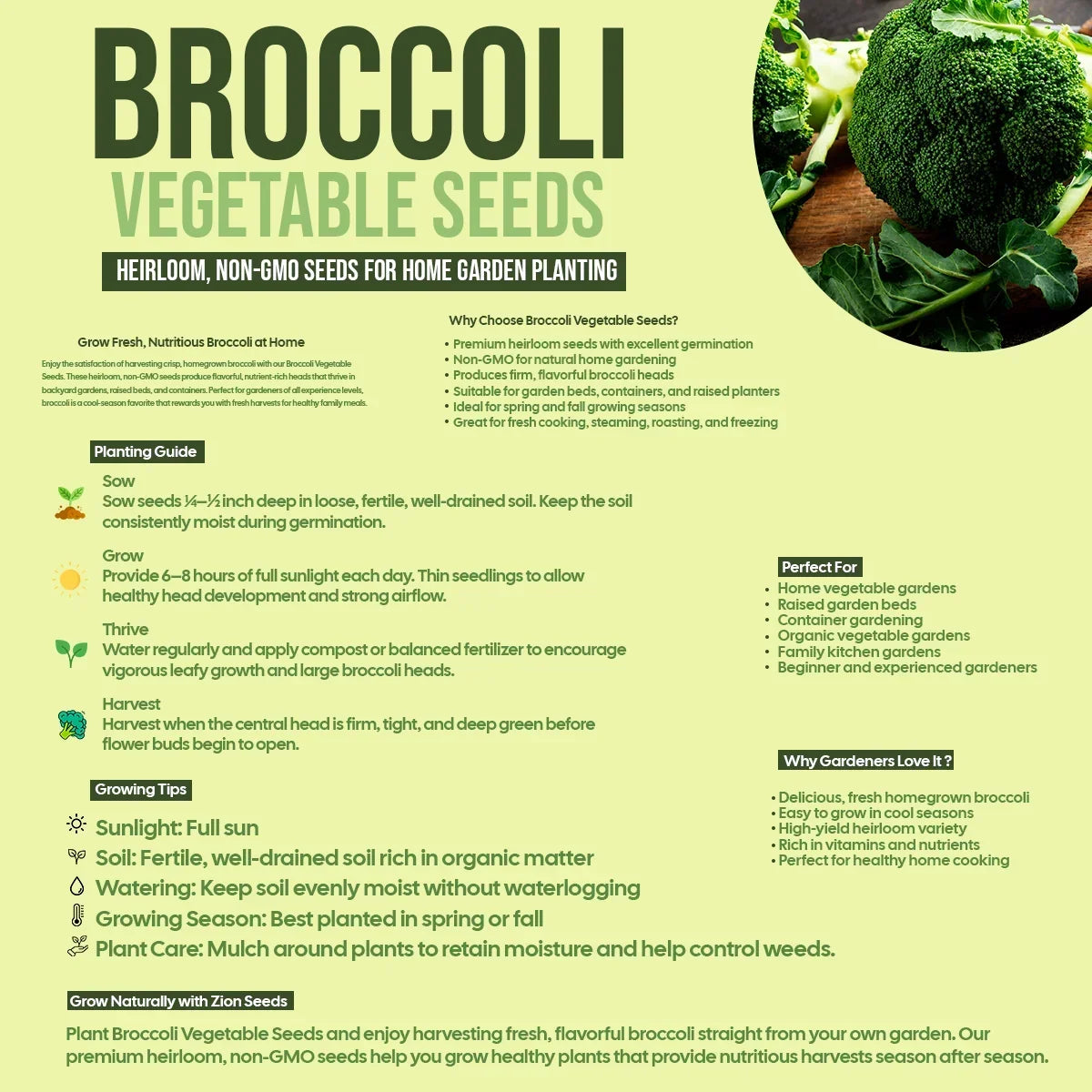
Broccoli Vegetable Seeds - Heirloom, Non-GMO for Home Garden Planting: A Complete Growing Guide
Grow Fresh, Nutritious Broccoli Right in Your Garden
Broccoli is one of the most rewarding vegetables to grow at home. Packed with vitamins, minerals, and antioxidants, this cool-season crop produces delicious green heads that are perfect for salads, stir-fries, soups, and steaming. By planting heirloom, non-GMO broccoli vegetable seeds, you can enjoy healthy, chemical-free harvests while preserving traditional varieties known for their excellent flavor and reliable performance.
Whether you're a beginner or an experienced gardener, broccoli is an excellent addition to your vegetable garden. With proper care, you can harvest fresh, crisp broccoli that tastes far better than store-bought produce.
Why Choose Heirloom, Non-GMO Broccoli Seeds?
Heirloom broccoli varieties have been grown and passed down for generations because of their exceptional taste, vigorous growth, and dependable yields. Unlike hybrid varieties, heirloom seeds can often be saved and replanted year after year.
Benefits include:
- Excellent flavor and tender texture
- Non-GMO and naturally grown
- High germination rates
- Suitable for raised beds, garden plots, and containers
- Rich source of vitamins C, K, and dietary fiber
- Ideal for organic gardening practices
How to Grow Broccoli Successfully
1. Choose the Right Season
Broccoli grows best in cool temperatures between 60°F and 75°F (15°C–24°C). Sow seeds in early spring or late summer for a fall harvest.
2. Select a Sunny Location
Plant broccoli where it receives at least 6–8 hours of direct sunlight daily. Good sunlight encourages larger, healthier heads.
3. Prepare Fertile Soil
Use well-drained, nutrient-rich soil with plenty of organic compost. A soil pH between 6.0 and 7.0 is ideal for healthy growth.
4. Planting Instructions
- Sow seeds about ¼ to ½ inch deep.
- Space plants 18–24 inches apart.
- Keep rows approximately 24–36 inches apart.
- Water gently after planting.
Watering and Care
Consistent moisture is essential for producing compact, tender broccoli heads. Water deeply once or twice a week, depending on weather conditions, while avoiding waterlogged soil.
Mulching helps:
- Retain soil moisture
- Suppress weeds
- Keep roots cool
- Improve soil quality over time
Feed plants with compost or a balanced organic fertilizer every few weeks to encourage vigorous growth.
Common Growing Tips
- Remove weeds regularly.
- Protect young plants from cabbage worms and aphids.
- Harvest heads before flower buds begin opening.
- Continue watering after the main harvest to encourage side shoots.
Harvesting Broccoli
Broccoli is usually ready to harvest in 70–100 days, depending on the variety. Cut the central head while the buds remain tight and dark green. Many heirloom varieties continue producing smaller side shoots after the main head is harvested, extending your harvest season.
Health Benefits of Broccoli
Fresh broccoli is considered one of the healthiest vegetables you can grow. It contains:
- Vitamin C for immune support
- Vitamin K for healthy bones
- Fiber for digestive health
- Folate and potassium
- Powerful antioxidants that support overall wellness
Growing your own broccoli ensures maximum freshness and nutrition.
Why Grow Broccoli at Home?
Home-grown broccoli offers better taste, fresher harvests, and complete control over growing methods. Heirloom, non-GMO seeds provide gardeners with reliable germination, vigorous plants, and abundant harvests while supporting sustainable gardening practices.
Whether you have a backyard garden, raised bed, or large containers, broccoli is an easy and productive vegetable that rewards gardeners with nutritious harvests throughout the cool growing season.
Start your vegetable garden today with premium heirloom, non-GMO broccoli seeds and enjoy fresh, healthy harvests straight from your home garden.

